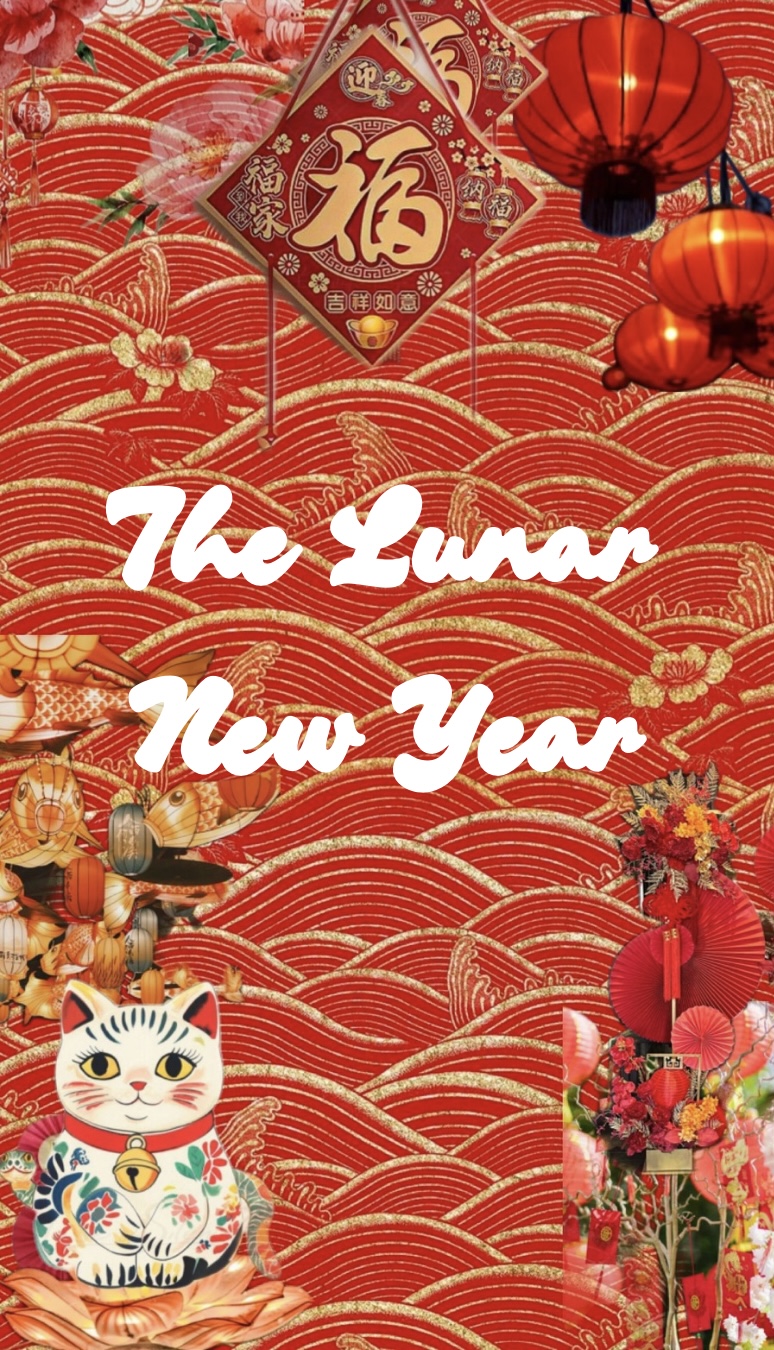
In January or February, many Asian cultures and countries celebrate Tết, or the Lunar New Years, a two week holiday that celebrates the first days of the years of the lunisolar calendar, and it is considered the most important holiday in China and Chinese culture.
Unlike the traditional calendar used in America, the 3,000 year old lunisolar calendar is based on the sun and the moon. A new month begins when the moon is not visible at night, otherwise known as the new moon. The new year starts on the new moon closest between the winter solstice, the shortest day of the year, and spring equinox, the day where night and day are the same length, otherwise known as the beginning of spring. This new moon falls somewhere between January 21 and February 20.
There are many traditions to celebrate the Lunar New Year. Much like American traditional New Year’s, thoroughly cleaning your house symbolizes getting rid of the previous bad luck the household may have brought from last year and bringing good luck into the new year. It is also custom to decorate households with red, which symbolizes joy and good fortune in Chinese cultures. It is also customary to have a family gathering or reunion to celebrate the Lunar New Year.
“I really enjoy Lunar New Years because I get to spend time with my family.” sophomore Leeah Wang said. “I really enjoy giving and receiving hóngbāo.”
Hóngbāo (Mandarin Chinese name), lì xì (Vietnamese name), or lucky money, is a traditional practice for the Lunar New Year, where people give bills in bao lì xì, or red envelopes. It is believed to symbolize luck, good health, and prosperity. It is customary to give these small amounts of money to children and unmarried adults.
“I love the Lunar New Year,” senior Grace Wong said. “It’s a super exciting time and I love the traditions that I have with my family. My dad and I cook a huge meal and make many traditional dishes. I love the red envelopes to. Lunar new year is super special to me.”
The small amounts of money given usually consist of numbers believed to signify good luck and good fortune: six, eight and nine. Consequently, amounts such as 66, 666, 88, 888, 99, and 999 are typically put into bao lì xì.
“I love Lunar New Years because I enjoy the yearly family reunion where we all have a huge dinner, play games, and pass out lì xì,” senior Collin Nguyen said.
Another tradition would be buying new clothes for the New Year, which is believed to symbolize good fortune, a fresh start, luck, and prosperity. “Sometimes, my family flies out to California for New Years shopping,” senior Collin Nguyen said—”to receive blessings at chùa (pagoda).”
During the Lunar New Year, there is usually a festival. These festivals usually include a lot of parties, firecrackers, which are similar to fireworks, and a traditional lion dance, where Chinese dancers wear masks and costumes to resemble a lion and perform many stunts.
On the third day of Lunar New Years,, it is seen as bad luck to visit family or friends or visit anyone. The day is celebrated to honor deceased relatives and visit their graves, or in some cases lighting incense. The seventh day is believed to recognize renri, or the day that humans were created. The ninth day is to recognize the birthday of the Jade Emperor, the ruler of heaven in Taoism. The Lantern Festival signifies the end of the Lunar New Year, where paper lanterns are lit to light the way for the parades that last all day and the lion dance. These colorful lights celebrate the first full moon after the new year, and are displayed outdoors and indoors. It is believed that lanterns inside temples guide lost souls home, but they were originally created by the monks in honor of Buddha. Wishing you a happy new year, or in Mandarin, Gong ci fa cai.