




















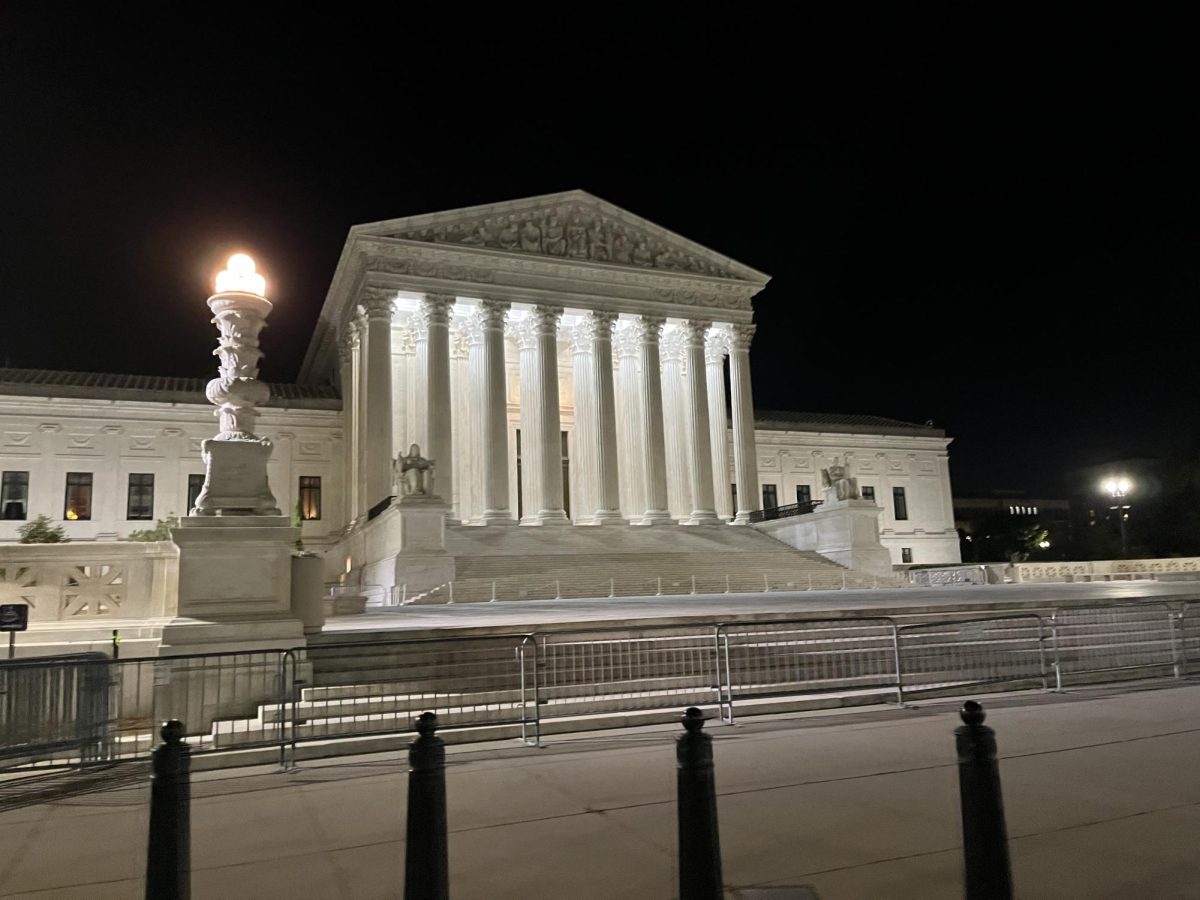







On April 27, the Supreme Court heard oral arguments for United States v. Chatrie, a case examining the constitutionality of geofence warrants, which makes companies like Google hand over their users location data for a certain area in a “dragnet search” to identify suspects for a crime, and whether they violate the Fourth Amendment’s protection against unreasonable search and seizure.
In 2019, an unknown person, with a firearm, robbed a credit union in Virginia, and was seen talking on a cellphone on security footage. By the end they got away with nearly $200,000. After two months of investigation, all leads dried up so Detective Joshua Hylton requested and received a geofence warrant signed by a judge from the Chesterfield County Circuit Court in Virginia to have Google offer the data of all users within a 150-meter radius of the crime 30 minutes before and after it took place. Google initially offered 19 users within the radius, the police asked for more detail on nine of them within a two hour period now of the robbery, and finally, Detective Hylton was given the full name and information on 3 people, from which Okello Chatrie was identified as the primary suspect. After a warrant was obtained for the search of Chatrie’s domicile, substantial evidence was found connecting him back to the crime, but he argued that the geofence warrant identifying him went against the Fourth Amendment and eventually the case was appealed all the way to the United States Supreme Court.
The main question proposed to the Supreme Court was whether a person could have a reasonable expectation of privacy after signing terms and conditions that allowed companies like Google to access this sensitive location data. Some people find that there’s a responsibility to know the context of terms and conditions before signing it to realize what you’re handing over to a company, others find that terms of conditions are often too lengthy and strewn in legal jargon for there to be a reasonable expectation for every customer to be familiar with all the technicalities of the agreement. “But it never, like, specifically says you want to sell your data? No, I don’t want to do that. I feel this should be a specific page for that, not just terms of agreements, because just [terms] of agreements, they have a way of fighting it,” student Dimitri Khechikashvili said.
“What if in the future, I’m at a protest, or some civil event, or a church? And the government decides they don’t like that church or that protest. I don’t want them to be able to track me down,” senior Evan Crockett said.